Rock mechanics advances by engaging with real-world challenges. The theories and methods developed in the Alps during the last century laid a solid foundation for our field. Yet when applied to the Himalayas —where geological conditions are particularly complex—these approaches often proved insufficient. Projects such as the Sichuan-Tibet Railway, with tunnels crossing multiple active fault zones, have faced prolonged difficulties, reminding us that our field must continue to evolve.
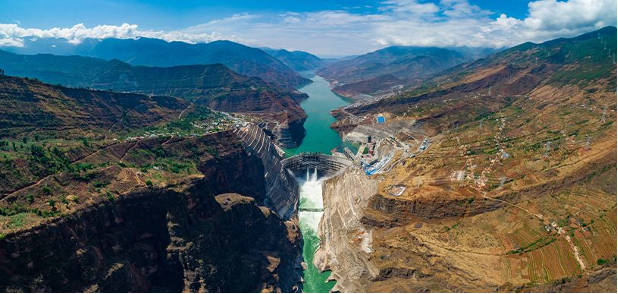
This shift from the Alps to the Himalayas is not only a matter of scale, but also of scientific complexity. The Himalayan orogenic belt presents unique challenges—dense fault networks, high in-situ stress, and extreme engineering conditions—that demand new thinking.
In response, our Society has been promoting collaborative research in areas such as deep tunneling under high stress and high temperature, ultra-deep drilling beyond 10,000 meters, and seismic precursor monitoring through the Newton Force Measurement Program—a network of sensors installed across active faults to capture physical signals associated with fault behavior.
We recognize that these challenges are shared by the global rock mechanics community. We look forward to continued exchanges and collaboration with colleagues worldwide, learning from each other as we work together to advance our discipline.
With warm regards.