
Baihetan Hydropower Station
1. Project background and significance
As a clean and efficient renewable energy source, hydropower plays a crucial role in global energy strategies. With the richest hydropower resources in the world, China has a long history of hydropower development and impressive achievements. Baihetan Hydropower Station is a major project of “West-East Power Transmission”, and the most technically difficult hydropower project in the world, with several key technical indicators reaching the first. The Baihetan project is mainly for power generation, taking into account multitasks such as flood control, navigation, comprehensive utilization of water resources, and water ecological security, with a gross installed capacity of 16 million kilowatts, and an average annual power generation of 62.443 billion kilowatt-hours. The green power will cross more than 2000 km to reach the East China region and help the local economy to develop in high quality. The Baihetan Hydropower Station marks the completion of the world’s largest clean energy corridor on the Yangtze River, consisting of six cascade hydropower stations, which produces electricity that replaces a large number of fossil fuels, helping to achieve the “dual carbon goals”. After all units of Baihetan Hydropower Station are put into operation, it is able to annually save about 19.68 million tons of standard coal and reduce emissions of carbon dioxide by about 52 million tons, which plays a positive role in improving China’s energy structure and has remarkable ecological benefits. Meanwhile, the construction of Baihetan Hydropower Station has improved local infrastructure such as transportation and communications, as well as education and healthcare facilities. It has created nearly 100,000 jobs, transforming the local economy from a weak foundation and low living standards for the population, injecting new momentum into regional economic development.
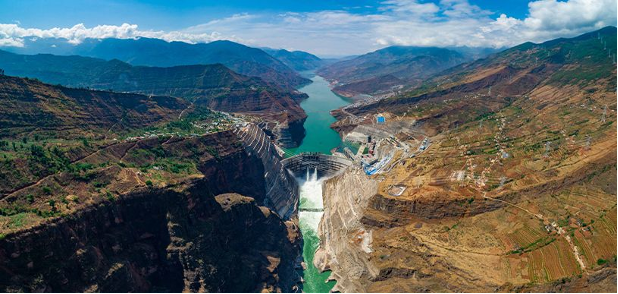
Fig. 1. Baihetan Hydropower Station (image from China Three Gorges Corporation)
2. Project overview
Baihetan Hydropower Station is the second cascade among the four hydropower cascades (i.e., Wudongde, Baihetan, Xiluodu, and Xiangjiaba) in the lower reaches of Jinsha River. It is located on the Jinsha River at the junction of Ningnan County, Sichuan Province, and Qiaojia County, Yunnan Province. With a total investment of 220 billion RMB, it is situated approximately 41 km upstream from Qiaojia County, and 182 km from the Wudongde dam site. Meanwhile, it is located approximately 195 km downstream from the Xiluodu Hydropower Station, and about 380 km from the river course of Yibin City. The dam site of the hydropower station controls a watershed area of 430,300 km2, accounting for 91% of the upstream watershed area of the Jinsha River.
Baihetan Hydropower Station is a type I large-scale (1) project, which is composed of the barrage, flood discharge and energy dissipation facilities, water diversion and power generation system as well as other major structures. The barrage is a concrete double-curved arch dam, with a crest elevation of 834 m. The maximum dam height is 289 m, ranking third in the world. The arch crest thickness is 14 m, and the maximum foundation thickness is 95 m. There is a plunge pool and the second dam located under the dam, and the flood discharge facilities consist of 6 surface holes, 7 deep holes, and 3 flood spillway caverns situated on the left bank of the dam. The flood spillway caverns are designed for flood discharge. The maximum flood discharge capacity of the three pressure-less flood spillway caverns in Baihetan is about 12,000 m3/s, with a speed of about 47 m/s. The underground powerhouse is symmetrically arranged on the left and right banks of the dam. Each powerhouse is equipped with 8 hydro-generating units each having a capacity of 1 million kilowatts, which is the world’s largest turbines. The 8 units on the left bank are independently developed and manufactured by Dongfang Electric Corporation, while the 8 units on the right bank are independently developed and manufactured by Harbin Electric Corporation, all of which are localized.
Planning for the construction of Baihetan Hydropower Station began in June 2010, and the main project commenced full construction in 2017. On June 28, 2021, the first generating units were commissioned and began generating electricity, and by December 20, 2022, all units had been commissioned and were fully operational. Since the commissioning of the power station, all functions have met the design objectives, with all performance indicators of the hub buildings exceeding the design values. The units are operating stably and efficiently. In October 2023, the cumulative power generation exceeded 100 billion kWh.
3. Technical challenges of the project
Baihetan Hydropower Station is not only the culmination of contemporary water conservancy projects, but also an innovator and leader in technology. Its annual power generation capacity is sufficient to meet the annual domestic electricity demand of 65 million people. Through the collective efforts of several generations, Baihetan Hydropower Station has truly emerged as a mega project. Baihetan Hydropower Station began its construction in 2010 and has since broken numerous world records in key technical indicators. These include the world’s largest installed capacity of a single million-kilowatt hydro-generator unit, the world’s largest underground power station cavern group, the world’s largest pressure-less flood spillway cavern group, the world’s largest cylindrical tailrace surge chamber, the world’s largest anti-seismic parameters of 300 m high arch dams, and the world’s first full-dam application of low-heat cement concrete. With a gross installed capacity of 16 million kilowatts, Baihetan Hydropower Station is the second largest in the world after the Three Gorges project. The hydropower station can withstand the total water thrust of 16.5 million tons, ranking second in the world. The barrage arch dam is 289 m, equivalent to the height of 100 floors, which is the third in the world. The maximum flood discharge capacity of 42,348 m3/s, and the flood discharge power of the hydropower hub is the third in the world. The detailed technical challenges in the Baihetan project are as follows:
(1) Temperature control and crack prevention of concrete: Temperature cracks, resulting from temperature variations inside and outside the concrete, are a common challenge in dam construction and have a direct impact on the quality of arch dams. The Baihetan dam site is located in a dry and hot valley with significant temperature differences and frequent windy weather, making temperature control and crack prevention in concrete a difficult task. Based on research and applications in other large-scale projects, the China Three Gorges Corporation organized research institutions to jointly tackle the key technologies of low-heat cement application in the Baihetan high arch dam. By adjusting the mineral composition of low-heat cement and optimizing temperature control indicators and measures for concrete, the produced low-heat cement features lower hydration heat, slower heat release rate, smaller shrinkage, and higher crack resistance, thus improving the crack resistance and safety of the Baihetan arch dam concrete. The low-heat cement concrete adopted throughout the dam has achieved good temperature control effects, providing solid guarantees for the “seamless dam”.
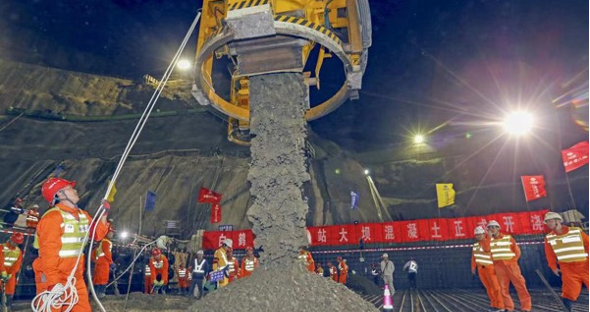
Fig. 2. Preparation of low-heat cement concrete (image from People’s Daily Online)
(2) Columnar jointed basalt foundation for high arch dam: The Baihetan dam foundation exposed columnar jointed basalt, which is a columnar mosaic structure. After excavation, the rock mass tends to relax, leading to a reduction in its deformation modulus. However, there are few studies on the engineering properties of columnar jointed rock masses both domestically and internationally, and this is the first time that columnar jointed basalt has been used as the foundation rock mass for an arch dam. Based on the design study of the Baihetan arch dam, comprehensive and systematic research has been conducted on the feasibility of using columnar jointed basalt as the foundation for an arch dam, the adaptability of the dam structure, blasting excavation techniques, anti-relaxation protection measures, and grouting treatment effects. Significant achievements have been made. The research results indicate that columnar jointed basalt can be used as the foundation for high arch dams, with an expected thickness of the relaxed layer is 2——3 m after excavation. After grouting treatment, the acoustic wave velocity of the rock mass is greater than 4,000 m/s. It is reasonable to use columnar jointed basalt as the foundation for high arch dams, but attention must be paid to the excavation and protection of the shallow rock mass. From the implementation perspective, the treatment measures are reasonable, and the construction of underground caverns must also overcome the challenges posed by columnar jointed basalt.
(3) Million-kilowatt hydro-generator units: The world’s largest single-unit capacity of million-kilowatt hydro-generator units, without any precedent to refer to, pose a challenge akin to scaling the “Everest” of the hydropower industry. Researchers have tackled a series of technical challenges, including the design of generator structures, hydraulic systems, ventilation, and the overall design of the units, firmly grasping the core technologies within the enterprise. This achievement marks a significant breakthrough in China’s high-end equipment manufacturing. As the world’s first batch of million-kilowatt hydro-generator units, they not only represent a tremendous leap in single-unit capacity, but their technological support has also led to an overall improvement in China’s hydropower equipment manufacturing industry, transforming China’s hydropower sector from a “follower” to a “leader”.
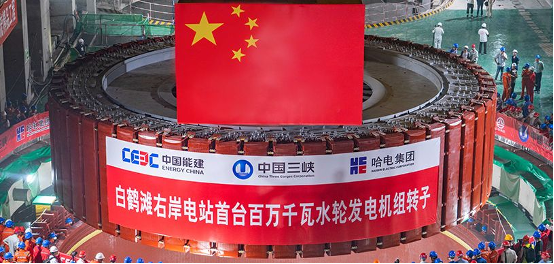
Fig. 3. Million-kilowatt hydro-generator units (image from China Three Gorges Corporation)
(4) Flood discharge and energy dissipation of the hub: Baihetan encounters challenges in flood discharge and energy dissipation due to its “high head, narrow valley, massive discharge, and asymmetric” conditions. With a total discharge of 42,348 m3/s and a flood discharge power of up to 90,000 MW, it ranks third after the Three Gorges Project and Xiluodu Project. To achieve symmetrical flood discharge and energy dissipation in the asymmetric arch dam, the orifice layout was optimized, leading to the design and construction of the world's largest inverted arch plunge pool and the largest pressure-less flood spillway cavern group. Thanks to these innovative structural designs, the problem of flood discharge and energy dissipation at the hub has been effectively addressed. Additionally, to improve terrain asymmetry and enhance the stress, displacement distribution, and stability conditions of the dam body, a concrete cushion was installed on the left bank dam top, and the exposed areas of columnar jointed basalt were reinforced with concrete to expand the foundation.
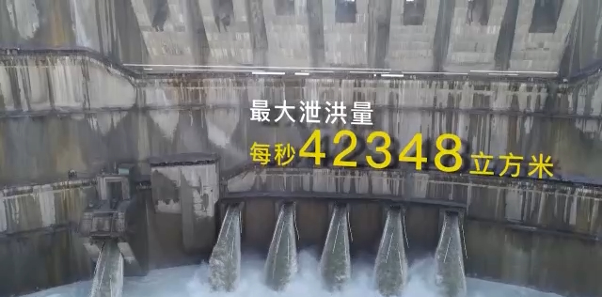
Fig. 4. Flood discharge and energy dissipation facilities of the hub (image from The Paper)
(5) Stability of surrounding rock in giant underground cavern groups: Under the dual influence of the immense scale and complex geological conditions, the stability control during the excavation of the underground powerhouse at Baihetan poses a particularly serious challenge. Through the establishment of an integrated real-time dynamic feedback analysis mechanism encompassing design, construction, and monitoring, and with the aid of various technical solutions, researchers have successfully addressed the stability problems of the surrounding rock in the cavern groups under the complex geological conditions of high ground stress, interlayer staggered zones, and hard brittle basalt. Additionally, to further enhance the overall stability of the cavern groups, the spacing between the powerhouse and the main transformer cavern is appropriately increased. The tailrace surge chamber adopts a cylindrical shape with better stability conditions for the surrounding rock and minimal impact on the cavern groups, thereby reducing the effects of the cavern group effect.
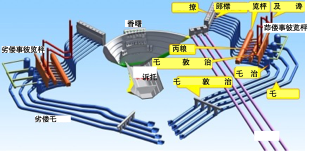
Fig. 5. Layout of the underground cavern Group on the left bank (image from China Institute of Water Resources and Hydropower Research)
(6) Research on seismic resistance of super-high arch dam and super-high slope in strong seismic zone: The Baihetan Hydropower Station is located in the Sichuan-Yunnan seismic zone, an area of intense seismic activity, where the ground motion parameters of the dam site are the highest in the world among the 300 m high dams. The newly issued “Seismic Ground Motion Parameter Zonation Map of China” and “Code for Seismic Design of Hydraulic Structures of Hydropower Project” have imposed higher requirements on seismic research and design of the project. Huadong Engineering Corporation, in collaboration with four domestic research institutions and universities with rich experience in seismic resistance, conducted seismic safety research on high arch dams and dynamic model tests. The research demonstrated that the seismic safety of high arch dams and the strength and stability of the Baihetan arch dam can meet the seismic design requirements of the dam, and proposed the main seismic measures for the dam. Furthermore, a seismic model test study was first conducted on the strongly unloaded slope of the water cushion basin on the left bank of Baihetan, specifically examining the acceleration variation pattern and amplification effect along the slope’s elevation, providing a basis for improving seismic analysis methods and seismic design for high slopes.
(7) Design of giant cylindrical tailrace surge chamber: The tailrace system of Baihetan Hydropower Station on both sides is relatively long. To address the problems of stability in the hydraulic transition process and the stability of high-sidewall surrounding rock in the long and complex tailrace system, four large-diameter cylindrical impedance-type tailrace surge chambers are arranged on both the left and right banks, with an excavation diameter of 43——48 m and a height of 90 m. The geological conditions in the surge chamber area are complex, with high ground stress, inter-bedded and intra-bedded dislocation zones, and columnar jointed basalt developing in the giant surge chamber dome, posing significant challenges to the stability of the surrounding rock of the dome. To address this challenge, comprehensive research has been conducted on dome shape optimization, construction sequence, support parameters, and monitoring design. The results have yielded a tailrace surge chamber dome design that is suitable for the engineering geological conditions of this project, along with numerous innovative achievements.
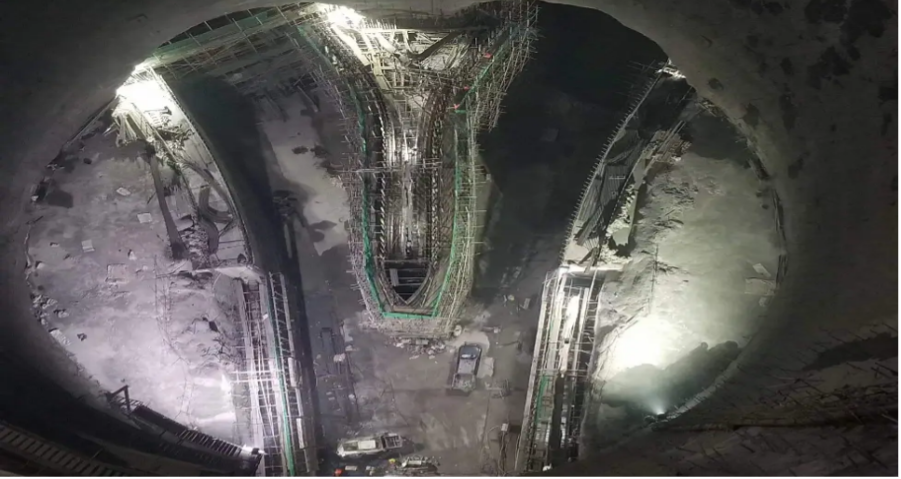
Fig. 6. Completion of excavation of 4# tailrace surge chamber (image from Huadong Engineering Corporation)
(8) Anti-seepage of the dam foundation and cavern ground under complex hydrogeological conditions: The underground powerhouse of Baihetan Hydropower Station is arranged with a new development scheme, located close to the reservoir area. Multiple interlayer staggered zones are distributed in the dam foundation and plant area, significantly impacting the anti-seepage of the dam and powerhouse, leading to complex seepage issues within the plant area. Huadong Engineering Corporation has conducted extensive experimental research on the seepage prevention and drainage layout, seepage field, and permeability stability. In addition to routine experiments, large-scale in-situ permeability deformation tests and high-pressure permeability tests were specifically conducted on major interlayer staggered zones and faults. The anti-seepage drainage systems of the arch dam and underground powerhouses on both banks were integrated into a comprehensive anti-seepage drainage system. Multi-angle and multi-scenario analysis and sensitivity analysis were performed on the anti-seepage drainage system of the dam and plant area. The impact of rainfall infiltration and flood discharge atomization on the seepage field of the left bank slope and the resistance bodies on both banks was analyzed through unsaturated seepage studies. For interlayer staggered zones and faults, an innovative anti-seepage technology combining curtain holes and cutoff holes was proposed for the first time.
References
[1] Overview of Baihetan Hydropower Station – The People’s Government of Sichuan Province Website (sc.gov.cn). Retrieved 1 May 2024.
[2] Baihetan Hydropower Station - Baidu Baike (baidu.com). Retrieved 1 May 2024.
[3] Baihetan Hydropower Station - A Super Project Leading Global Hydropower Development - National Energy Administration (nea.gov.cn). Retrieved 1 May 2024.
[4] The Main Structure of Baihetan Hydropower Station Dam Is Completed, with the World’s second Largest Total Installed Capacity after the Three Gorges Project (thepaper.cn)
[5] Baihetan Hydropower Station (ctgpc.com.cn). Retrieved 1 May 2024.
[6] Decoding “Baihetan” on the Jinsha River - National Energy Administration (nea.gov.cn)
[7] How Impressive Is China’s Baihetan Hydropower Station? With a Total Cost of 180 Billion RMB, It Creates Multiple World Firsts! - Zhihu (zhihu.com). Retrieved 1 May 2024.
[8] Behind the Six World Firsts of Baihetan Hydropower Station, the Jinsha River Has Emerged from Nothing in Half a Century - The Paper. Retrieved 1 May 2024.
[9] Xi Jinping Sends a Letter of Congratulations on the Launch of the First Batch of Units at Baihetan Hydropower Station - Rolling News - The People’s Republic of China Website (www.gov.cn). Retrieved 1 May 2024.
[10] The “White Crane” Dancing Among the Jinsha River - Decoding the World’s Largest Clean Energy Corridor - Xinhua News (xinhuanet.com). Retrieved 1 May 2024.
[11] China Has Built the World’s Largest “Clean Energy Corridor” - Picture News - The People’s Republic of China Website (www.gov.cn). Retrieved 1 May 2024.
[12] Anatomy of Baihetan Hydropower Station: A Super Project Supported by a Complete Industrial Chain - National Energy Administration (nea.gov.cn). Retrieved 1 May 2024.
[13] Baihetan Hydropower Station - Sogou Baike (sogou.com). Retrieved 1 May 2024.
[14] Why Is Baihetan Hydropower Station Needed Despite the Difficult Construction and Cost of 180 Billion RMB with the Existence of the Three Gorges Project? Is It Worth It? - Tencent News (qq.com). Retrieved 1 May 2024.
[15] [Fully Prepared to Meet the Summer Peak] Baihetan Hydropower Station’s 16 Million Kilowatts Units Were Fully Connected to the Grid for the First Time - State-owned Assets Supervision and Administration Commission of the State Council (sasac.gov.cn). Retrieved 1 May 2024.
[16] Scaling the “Peak of Hydropower”! Exploring the Secrets of Innovation Behind China’s Baihetan Hydropower Station - Economy & Technology – People’s Daily Online (people.com.cn). Retrieved 1 May 2024.
[17] Baihetan Hydropower Station Named One of the “Top 10 Engineering Achievements of 2023” (ctg.com.cn). Retrieved 4 May 2024.
[18] “Striving China” - Baihetan Hydropower Station - CCTV Program Official Website - CCTV-9 - CNTV (cctv.com). Retrieved 4 May 2024.
[19] Baihetan, a Major National Project | The World’s Largest Tailrace Surge Chamber Cluster Has Been Completed! - Units (sohu.com). Retrieved 4 May 2024.
[20] Several Key Difficulties in Baihetan Project Construction - CNKI (cnki.net).
[21] Study of Deformation Characteristics of the High Sidewall Surrounding Rock in Super Large Underground Caverns - CNKI (cnki.net). Retrieved 4 May 2024.