
Hong Kong–Zhuhai–Macao Bridge
I. Project Overview
The Hong Kong–Zhuhai–Macao Bridge (HZMB) is a mega cross-sea bridge–tunnel system connecting Hong Kong, Zhuhai, and Macao, with a total length of 55 km. It is the longest, largest, and most technically complex cross-sea highway bridge–tunnel project in the world. The bridge reduces travel time among the three regions from approximately three hours to about 30 minutes, significantly promoting the integrated development of the Guangdong–Hong Kong–Macao Greater Bay Area.
The main structure adopts a combined “bridge–island–tunnel” scheme, consisting of 22.9 km of bridges and a 6.7 km immersed tunnel, with artificial islands serving as transition structures between the bridge and tunnel sections.
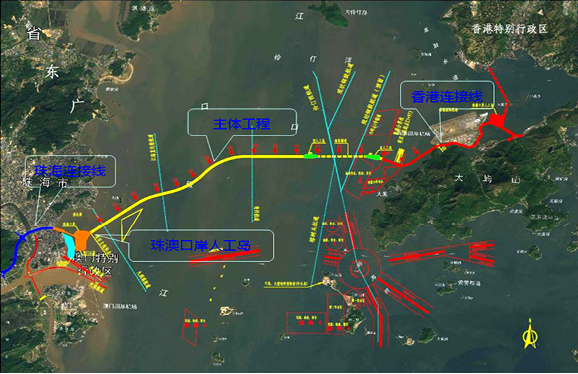
Figure 1. General layout of the Hong Kong–Zhuhai–Macao Bridge project[1]
II. Technological Breakthroughs
(1) Immersed Tunnel Technology in Deep Offshore Waters
The immersed tunnel and its associated technologies represent the core of the entire project. This solution reduced the required length of bridges and artificial islands, lowered the obstruction to water flow, maintained navigational clearance, and avoided conflicts with nearby shipping routes.
A semi-rigid immersed tube structure was innovatively adopted, combined with flexible joints and a temporary prestressing system, significantly enhancing the overall structural integrity, watertightness, and seismic performance [2]. Supported by accurate meteorological and hydrological forecasting and decision-making models, the project achieved the safe floating transportation and precise immersion of large-scale tunnel elements [3].
(2) Immersion under Severe Sea Conditions and Innovation of the Final Joint
The immersed tunnel joints of the HZMB adopted an innovative “integral prefabrication and installation with active water-stopping” scheme [4]. The final joint is a steel–concrete sandwich structure weighing approximately 6,000 tons. After land-based prefabrication, it was lifted and lowered as a whole using a 12,000-ton floating crane.
Through integral hoisting and hydraulically activated compression of water-stopping seals, welding operations were completed in a dry working environment. This approach substantially reduced underwater operations and offshore construction time, while significantly improving construction safety and quality [5].
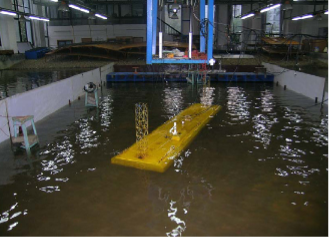
Figure 2. Physical model test of immersed tube floating transportation [2]
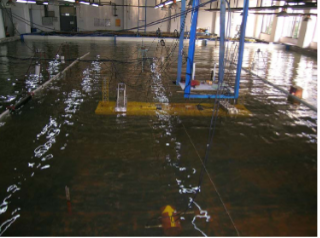
Figure 3. Physical model test of immersed tube immersion[2]
(3) Rapid Artificial Island Construction and Bridge–Tunnel Transition Technology
The artificial islands were constructed using a rapid island formation technique with large steel cylindrical cells. Steel cylinders with a diameter of 22 m and a maximum height of 40.5 m were vibrated into position using an eight-unit synchronized hydraulic vibratory hammer system, achieving a verticality deviation of less than 1/500, setting a world record.
The artificial islands integrate multiple functions, including bridge–tunnel transition, ventilation, operation management, and emergency rescue [6].
References
[1] Li Ying, Chen Yue. Significance and technical challenges of the island–tunnel project of the Hong Kong–Zhuhai–Macao Bridge. Engineering Mechanics, 2011, 28(S2): 67–77.
[2] Li Ying, Hans de Wit. Technical challenges and innovations of the immersed tunnel of the Hong Kong–Zhuhai–Macao Bridge. Southern Energy Construction, 2017, 4(2): 1–16.
[3] CCCC Highway Consultants Co., Ltd. Design Consortium. Construction Drawing Design of the Island–Tunnel Project of the Main Works of the Hong Kong–Zhuhai–Macao Bridge, Part IV, Volume I: General Design. Zhuhai, 2016.
[4] Netherlands Tunnel Engineering Consultants, et al. Consulting Report on the Construction Drawing Design of the Island–Tunnel Project of the Main Works of the Hong Kong–Zhuhai–Macao Bridge. Zhuhai, 2017.
[5] Su Q. K., Chen Y., Li Y., et al. Hong Kong–Zhuhai–Macao Bridge link in China—stretching the limits of immersed tunnelling. In: Proceedings of the ITA World Tunnel Congress. Helsinki: ITA, 2011.
[6] Hong Kong–Zhuhai–Macao Bridge Authority. Technical Specification for Durability Quality Control of Concrete Structures of the Hong Kong–Zhuhai–Macao Bridge. Revised Edition. Zhuhai, 2013.