
Muzhailing Tunnel on the Lanzhou-Chongqing Expressway
Project Background and Significance
The Muzhailing Tunnel, a key project of the Lanzhou-Chongqing Expressway, plays a significant role in advancing the Belt and Road Initiative, promoting transportation in the northwest and southwest, and accelerating the outward-facing economic development of the western region. After the Muzhailing Tunnel is completed, the driving time between Weiyuan and Wudu in Gansu Province will be reduced from 4 h to 2.5 h. This will enable the full operation of the G75 National Expressway from Lanzhou to Haikou, one of China’s major north-south highways. The completion of the Muzhailing Tunnel is a milestone in China's expressway construction, marking a significant breakthrough in overcoming world-class tunnel construction challenges—tunneling in soft rock with high in-situ stress and large deformation.
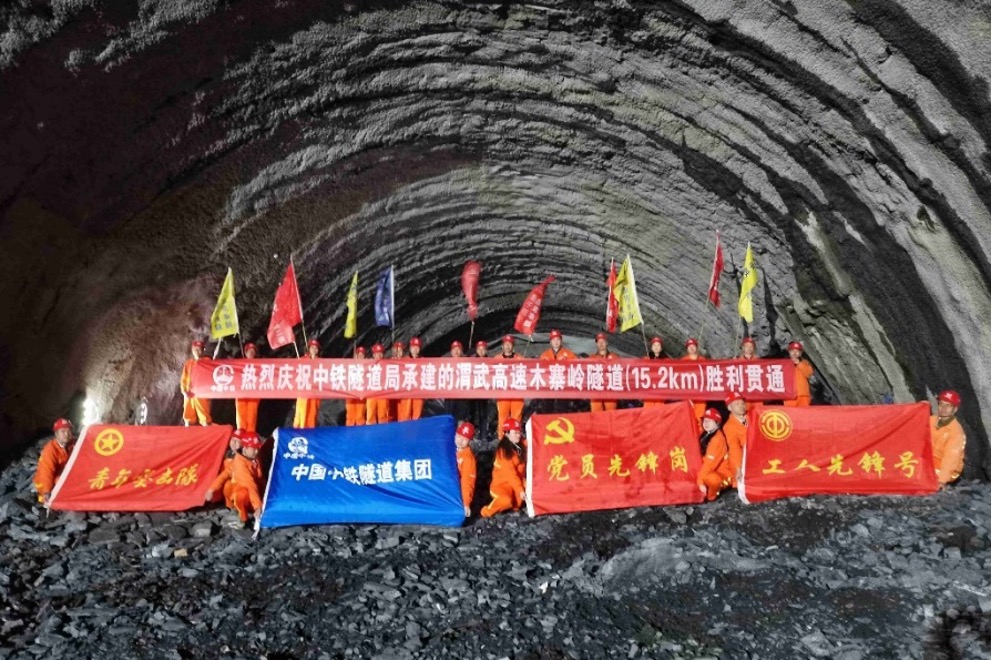
Figure 1. Successful completion of the Muzhailing Tunnel (source: China Science and Technology Network)
Project Overview
The Muzhailing Tunnel is located at the junction of Minxian and Zhangxian counties in Dingxi City, Gansu Province, and runs parallel to National Highway G212. The total length of the tunnel is 19.095 kilom. The tunnel is designed with a separated dual-tube structure, accommodating four lanes with a design speed of 80 km/h.
Muzhailing is located at the junction of the North China, Yangtze, Tarim, and Qinghai-Tibet plates, where the rock is primarily composed of weak carbonaceous slate, significantly affected by tectonic stress. The problem of large deformations in soft rock under high in-situ stress is particularly prominent. The tunnel site is at a high altitude with steep mountains and deep valleys in a "V" shape. Natural slopes are generally steeper than 50 degrees. The surface elevation ranges from 2,416 to 3,133 m, with a relative height difference of 717 m. The rock mass is exposed along the ridges, with severe weathering and well-developed joints.
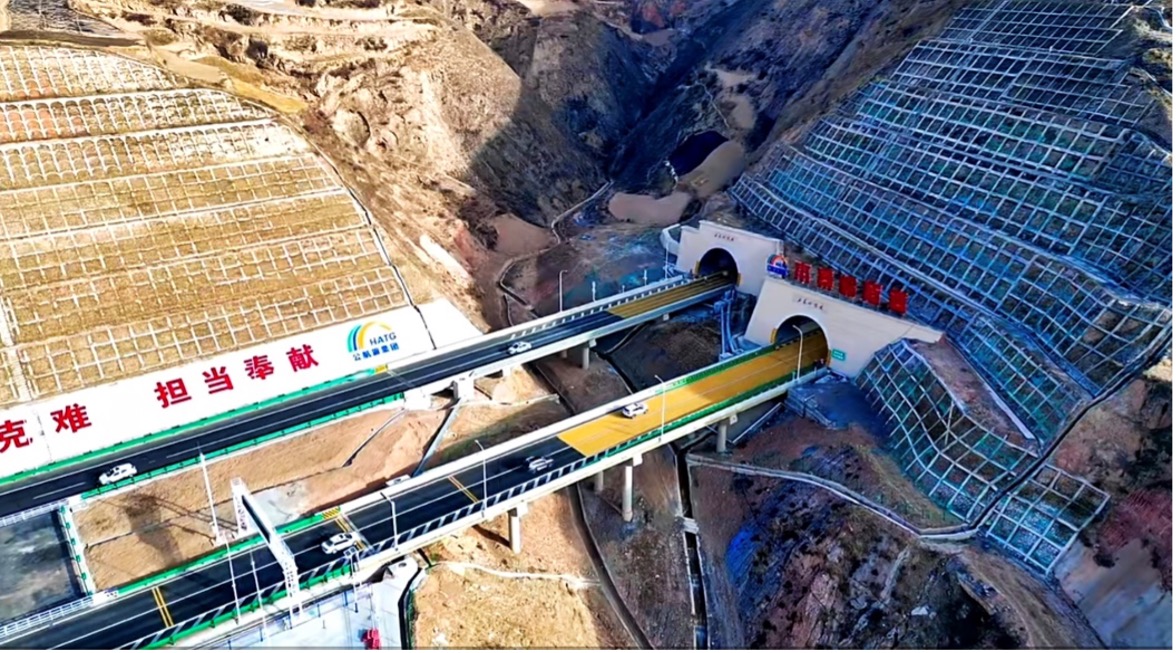
Figure 2. Muzhailing Tunnel (source: social media video)
Technical Challenges
Over 60% of the Muzhailing tunnel is buried deeper than 500 m, with the maximum burial depth reaching 629.1 m, placing it in a high-stress zone. Since construction began in May 2016, the large deformations in the soft rock have been severe. The maximum deformation on one side of the tunnel exceeded 2,000 mm, setting a national record. This scale of deformation exceeded the theoretical understanding of rock mechanics and tunnel construction practices, surpassing existing codes and standards. There was no prior experience to draw from, leading experts to refer to it as a "world-class challenge in tunnel engineering" and a "no-go zone in the field of tunnel construction."
To address the challenges of constructing the Muzhailing Tunnel, a new method for controlling large deformations in soft rock tunnels was developed. This method utilizes a novel NPR (Negative Poisson's Ratio) anchor cable system, which compacts the loose and fragile rock to form an arched bearing structure, improving rock stability. The NPR anchor cables continue to resist deformation even when the axial force exceeds the constant resistance, preventing sudden failures. As the surrounding rock deforms, the NPR anchor cables stretch, slowly releasing deformation energy. After the rock stabilizes, the cables maintain stable support resistance and can be re-tensioned if needed. These cables, embedded in the rock, act like sewing threads that compress the carbonaceous slate, reinforcing the rock, increasing its stiffness, and controlling deformation. However, under such high-stress conditions, this method alone was insufficient to control deformation. By adding single-layer arch concrete support, the combined effect reduced the maximum tunnel deformation from 2 m to 30 centim.
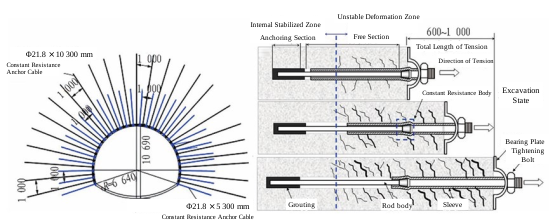
Figure 3. Schematic diagram of the NPR anchor cable technology principle (Hong et al., 2021)
References:
https://www.stdaily.com/index/kejixinwen/202307/11472dc516274242b6e6c9e6f6556e4d.shtml
https://www.chinanews.com.cn/gn/2023/09-17/10079398.shtml
Li Jiaqi. Study on Deformation Prediction and Large Deformation Grading Standards for the Construction of Muzhailing Tunnel on Weiyuan-Wudu Expressway [D]. Lanzhou Jiaotong University, 2019.
Hong, K. & Feng, H. Development and thinking of tunnels and underground engineering in China in recent 2 years (from 2019 to 2020). Tunnel Construction 41, 1259-1280 (2021).